

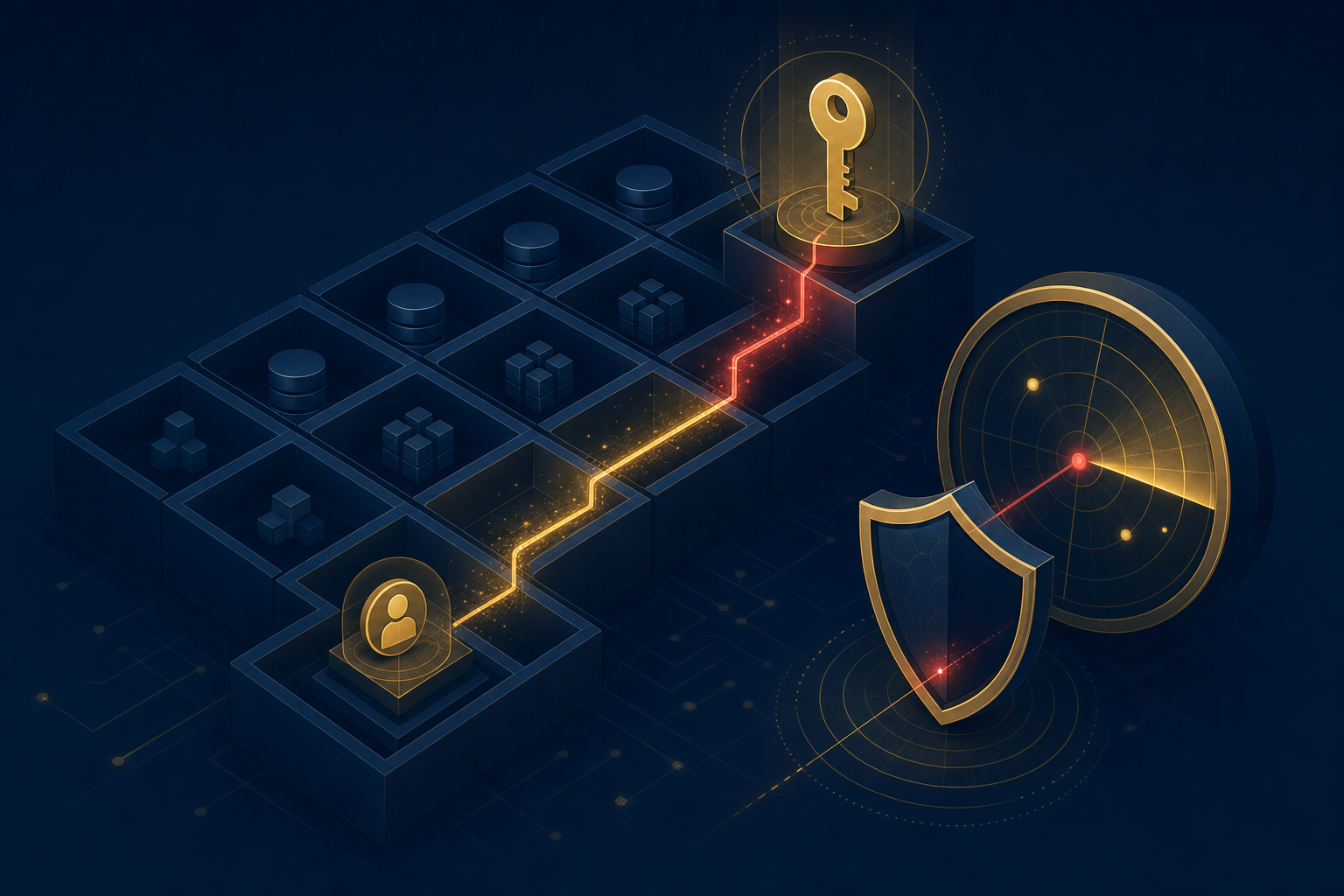
A standard user reading and manipulating an administrator's registry — without an exploit chain, but through a legitimate Windows service. That is exactly what LegacyHive demonstrates, and Microsoft has not yet shipped a patch for it.
On July 14, 2026, the researcher Nightmare-Eclipse (new alias MSNightmare) published the LegacyHive PoC. It exploits a weakness in the Windows User Profile Service (ProfSvc) and the way it loads registry hives: through a finely timed path-switching trick, an ordinary standard user mounts another user's registry hive — including an administrator's — into their own HKU\…\Classes (Current User Classes Root). From there, escalation up to full system takeover is possible.
Why This Is Serious
- 1Works on all supported Windows versions — including the July 2026 Patch Tuesday level. The regular monthly update does not close the gap.
- 2No CVE, no Microsoft advisory, no patch (as of this article). Confirmed exploitation in the wild has not yet been documented.
- 3The PoC is deliberately stripped down: it currently requires a second standard-user credential and a third username. The author stresses that the original needed no foreign credentials and was not limited to usrclass.dat — so the public picture rather understates the real reach.
What Matters Now: Detection
Without a patch, detection is the primary countermeasure. Our lab analysis (in an isolated environment freshly set up per topic) reveals the reliable indicators:
- Strongest IOC: a hive load in which a foreign user hive is loaded into
HKU\S-1-5-21-…_Classes— by a process that is not a Windows system service (not svchost/lsass/services/winlogon). - Additionally: access to a foreign
NTUSER.DAT/UsrClass.dat(C:\Users\<other>\…) by an atypical process. - We ship concrete rules: a Sysmon configuration for the relevant registry and file events, and a Wazuh detection rule (level 12, MITRE T1547.001/T1055) that fires on exactly this pattern.
<rule id="100300" level="12">
  <if_sid>61614,61615</if_sid>
  <field name="win.eventdata.targetObject" type="pcre2">(?i)(?:\\+REGISTRY\\+USER\\+|HKU\\+)S-1-5-21-[0-9-]+_Classes</field>
  <field name="win.eventdata.image" negate="yes" type="pcre2">(?i)\\(svchost|lsass|services|winlogon|csrss|wininit)\.exe$</field>
  <description>LegacyHive: foreign user hive into HKU\...\Classes by non-privileged process</description>
  <mitre><id>T1547.001</id><id>T1055</id></mitre>
</rule>
We validated this rule in an isolated lab environment against real Sysmon events — the hive-load access by a non-system process reliably triggered a level 12 alert.
Hardening While No Patch Exists
- Least privilege for local standard accounts; no shared standard credentials (the PoC needs a second account).
- Monitor and alert on the IOCs above with high priority until Microsoft ships a fix.
- Ensure accountability: whoever performs privileged actions must be logged in a tamper-evident way — especially for a technique that abuses administrator context.
How We Support You
For that last point, it pays to look at your own evidence and access architecture: with our Independent Log Vault, security-relevant events land in a tamper-proof store, independent of the administrators being logged — precisely what an escalation via foreign hives would otherwise blur. And our Privileged Access Bridge consolidates controlled, fully audited administrative access. If you want to set up detection in a structured way, an external ISO (information security officer) and our detection-centric approach help turn IOCs into robust alerts.